
SiteW makes website creation easy and enjoyable thanks to a solution without technical or financial constraint.
Testimonials, interviews and examples of created websites. Discover our users’ reviews and creations.
Our history, news and commitments. Beyond online service, discover SiteW.
All resources at the service of your online presence.
12 minutes
In the fast-paced world of artificial intelligence (AI) and data science, knowledge graphs have emerged as a game-changing technology across a wide range of applications.
They play a crucial role in Natural Language Processing (NLP) and Retrieval-Augmented Generation (RAG), enabling systems to represent networks of real-world entities—such as objects, events, situations, and concepts—and map the relationships between them.
By structuring information in this way, knowledge graphs help machines better understand, connect, and retrieve data, making them an essential component of many modern AI systems.
In this blog article, we'll take an in-depth look at knowledge graphs, exploring how they work, their key components, and the practical applications that make them so valuable today. 🔎
But first…
To understand how a knowledge graph works, we first need to clarify what knowledge actually is.
Knowledge can be defined as information that enables us to draw conclusions or make informed decisions when faced with a specific question or situation. 🤔❓
In the real world, knowledge can generally be categorized into three main types:
Situational knowledge: knowledge that changes depending on events, circumstances, or context.
Layered knowledge: knowledge that exists across multiple levels and is connected through associations and relationships.
Evolving knowledge: knowledge that adapts and changes as new information becomes available, continuously reshaping context and meaning.
Now that we have a clearer understanding of knowledge, let's explore what a knowledge graph is. 🕵️
A knowledge graph is a structured data model that organizes information by representing concepts, entities, and the relationships between them.
Knowledge graphs are widely used by machines to process, understand, and connect information more effectively. They are designed to bring together relevant, up-to-date data from multiple sources and present it in a meaningful way based on a user's specific needs.
By mapping relationships and establishing logical connections between pieces of information, knowledge graphs help transform raw data into structured knowledge that machines can interpret and use intelligently.
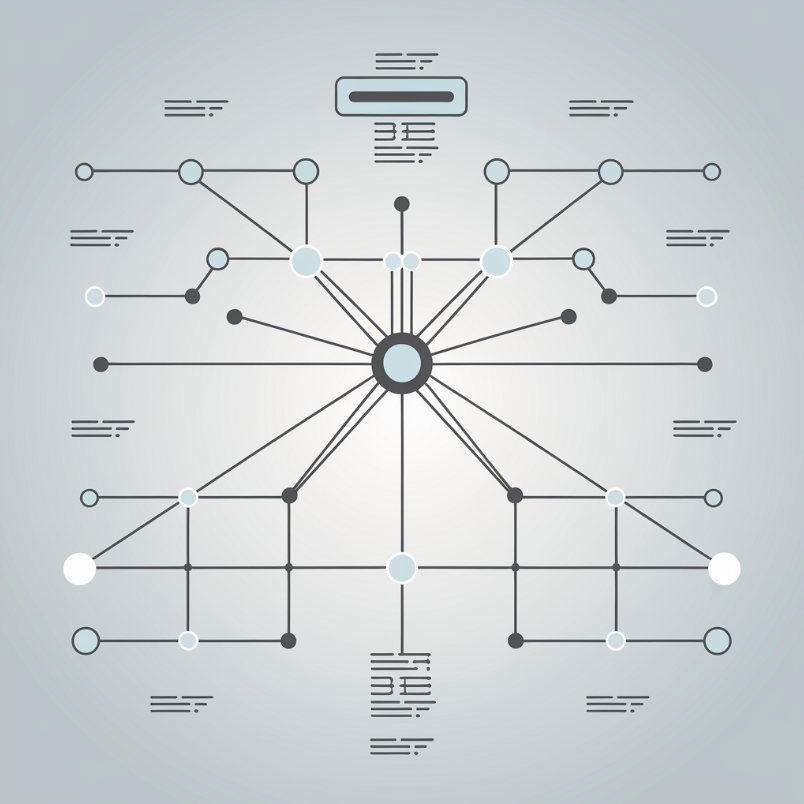
Knowledge graphs can bring dormant or siloed data back to life by connecting it to a broader ecosystem of information. By establishing meaningful relationships between previously isolated data points, they enable both users and machines to extract value from large volumes of information that would otherwise remain disconnected, difficult to interpret, and ultimately underutilized.

Dormant data refers to information that can no longer be effectively used by people or applications because it has lost its contextual links to the rest of the database.
Regardless of its quality, data that lacks context often becomes inaccessible or irrelevant, consuming storage space and organizational resources without delivering any real value.
Unlike traditional relational database management systems (RDBMSs), which store information in rows and columns within tables, knowledge graphs represent data as interconnected entities and relationships.
In a knowledge graph, entities are represented as nodes, while the relationships between them are represented as edges. Nodes can represent virtually anything—people, places, organizations, products, or concepts—while edges describe how those entities are connected.
This graph-based structure provides a more holistic and interconnected view of information, making it easier to uncover insights, identify patterns, and support decision-making. 🧠💭
Although both technologies are designed to store and manage data, they differ significantly in several key areas...
Traditional RDBMSs organize data into tables composed of rows and columns, using keys to define relationships.
Knowledge graphs, by contrast, use a network-based structure built around nodes and edges, allowing for a more flexible, dynamic, and intuitive representation of information.
In relational databases, relationships themselves cannot typically contain attributes.
Knowledge graphs, however, allow both entities and relationships to have their own properties. This provides a richer and more detailed representation of how different pieces of information relate to one another.
One of the most powerful features of knowledge graphs is their ability to infer new information from existing relationships.
By analyzing connections between entities, a knowledge graph can derive additional insights without requiring every relationship to be explicitly defined. Traditional relational databases generally depend on predefined queries to uncover such connections.
A knowledge graph can be understood through three fundamental concepts...
A knowledge graph contains both concrete entities (such as people, places, organizations, or objects) and more abstract concepts, such as categories, ideas, or themes.
Entities are connected through relationships that describe how they interact.
For example, a graph may connect the entity "Berlin" to the entity "Germany" through the relationship "is the capital of."
A knowledge graph can be visualized as a network of interconnected nodes linked by relationships, much like a mind map that illustrates how different ideas and entities are connected.
Knowledge graphs help organizations understand, organize, and interpret complex data. They facilitate information retrieval, improve data discovery, and enable machines to better understand the relationships between different pieces of knowledge.
➡️ In short, a knowledge graph is a structured and visual framework for connecting information, making knowledge more accessible, meaningful, and interconnected.
Every knowledge graph is built on three core elements: nodes, edges, and properties.
Nodes represent real-world entities.
Edges represent the relationships between those entities.
Properties (or attributes) describe the characteristics of both nodes and relationships.
Real-world entities may include concepts, services, products, locations, or users. Relationships can express a wide range of connections, such as hierarchy ("is a subset of"), location ("contains"), classification ("is a"), ownership, membership, and many others.
The node-and-edge architecture of a knowledge graph makes it possible to capture complex semantic relationships and deliver more relevant, context-aware search results.

Berlin is the capital of Germany and was historically part of the German Confederation.
In a knowledge graph, the Berlin node can therefore be connected through multiple relationships, such as "capital of" Germany and "city of" the German Confederation.
This ability to connect entities through meaningful and context-rich relationships is what makes knowledge graphs such a powerful tool for organizing, understanding, and leveraging information.
When searching for information about a person, a knowledge graph can reveal much more than basic facts. It can also uncover connections to related entities, such as organizations, locations, historical events, or other individuals.
Consider the two nodes "Francis I of France" and "Chambord." The edge connecting them could represent the relationship that the French king commissioned the construction of the famous Loire Valley château. 🏰
By mapping these types of connections, knowledge graphs enable machines (including Google's algorithms) to understand how entities relate to one another within a broader context.
Relationships themselves can also contain properties that provide additional details about the nature of the connection, making the graph even more informative and nuanced.
One of the greatest strengths of a knowledge graph is its ability to integrate and connect data from multiple sources, creating a more complete and coherent view of information.
Imagine you want to estimate the number of fine-dining restaurants in Paris. A single source, such as census data or official records, may provide only a partial picture.
By combining this information with additional sources (such as online reviews, business directories, and customer ratings) a knowledge graph can infer that the actual number of fine-dining establishments likely falls between 100 and 150. This estimate may differ significantly from the figures provided by any single data source alone. 🍴
By aggregating and contextualizing information, knowledge graphs can generate insights that would be difficult to obtain from isolated datasets.
Knowledge graphs rely heavily on Natural Language Processing (NLP) to enrich and structure data semantically.
NLP techniques make it possible to extract information from unstructured content (such as articles, reports, websites, or social media posts) and transform it into structured, interconnected datasets that can be incorporated into a knowledge graph.
Beyond data extraction, NLP also helps machines understand the context, meaning, and intent behind information. This contextual understanding is essential for ensuring that knowledge graphs remain accurate, relevant, and useful when answering queries or supporting decision-making processes.

The primary purpose of a knowledge graph is to operationalize knowledge and make it readily available when users ask specific questions. By connecting and contextualizing information, knowledge graphs enable more effective data integration, analysis, and reuse.
The concept gained widespread attention in 2012 when Google introduced its Knowledge Graph, using it to enhance the way information is discovered and presented in search results.
This technology was developed to achieve several key objectives...
Knowledge graphs help users navigate vast amounts of data and quickly find the information they are looking for, even within billions of interconnected data points.
By identifying previously unseen relationships between entities, knowledge graphs can surface valuable insights and related information.
This additional context may not be part of the user's original query, but it can enrich the search experience and provide a broader understanding of the topic.
One of the most powerful capabilities of a knowledge graph is its ability to interpret the context behind a search query and deliver results accordingly.
For example, the term "mouse" may refer either to a computer peripheral or to the animal. By analyzing context, a knowledge graph can determine the user's intent and present the most relevant information. 🖱️🐁
Knowledge graphs are designed to process and connect information extremely quickly, enabling search engines to display relevant results in just a few milliseconds. ⏱️
Knowledge graphs have become an essential component of many modern technologies.
In combination with Natural Language Processing (NLP), they power recommendation engines used by streaming platforms, e-commerce websites, and countless digital services.
By analyzing user preferences, behavior patterns, and relationships between different types of content, these systems can recommend relevant products, movies, music, articles, or services, ultimately improving the user experience.
Knowledge graphs also play a critical role in search engines such as Google and other AI-powered search platforms, helping them better understand user intent and deliver more accurate and relevant results. 🎯
When a user enters this query into Google, a knowledge panel may appear alongside the search results, displaying key information about the artist, including biographical details, social media profiles, songs, albums, and related videos.
Similarly, if someone searches for a historical figure such as Francis I of France, the Knowledge Graph can provide information about his life, achievements, and historical context, while also suggesting related figures such as Leonardo da Vinci, one of his contemporaries.
These examples demonstrate how knowledge graphs enrich the search experience by presenting information in a connected, contextualized, and easy-to-explore format.
By understanding the relationships between words, concepts, and entities, search engines can anticipate what information users may find valuable next.
Knowledge graphs also contribute to features such as Google's related questions and related searches (“People Also Ask”), helping users discover additional topics connected to their original query.
For example, YouTube can leverage knowledge graphs to recommend videos based not only on a user's viewing history but also on the semantic relationships between different topics and creators.
Likewise, social media platforms combine relationship analysis, user interactions, and content-based recommendations to suggest new friends, groups, communities, or posts that align with a user's interests.
Beyond search engines and recommendation systems, knowledge graphs are transforming a wide range of industries.
Here are some notable examples…
In the healthcare sector, knowledge graphs help improve patient care by integrating medical information from multiple sources. 🩺
They enable healthcare professionals to access a more comprehensive view of a patient's medical history, treatment options, diagnostic information, and potential drug interactions.
By connecting these different data sources, knowledge graphs support more informed decision-making, improve care coordination, and ultimately contribute to better patient outcomes.

Financial institutions use knowledge graphs to detect fraud, assess credit risks, and optimize investment strategies. 💵💲
By analyzing relationships between transactions, accounts, customers, and other entities, they can uncover suspicious patterns, identify potential risks, and make more informed decisions.
Knowledge graphs also have a wide range of business and commercial applications.
Some notable examples include...
Platforms such as YouTube use knowledge graphs to recommend videos based on users' interests, search history, and viewing behavior.
In the insurance industry, knowledge graphs can help verify the legitimacy of claims by identifying connections between policyholders, incidents, locations, and historical records.
Knowledge graphs help businesses better understand relationships between products, customer preferences, and purchasing behavior.
This enables retailers to deliver more relevant product recommendations and support upselling and cross-selling strategies.
Google uses its Knowledge Graph to enrich search results with additional contextual information.
When a user searches for "tea shops near me," Google does far more than simply display a list of nearby businesses. Users may also see ratings, reviews, opening hours, directions, photos, contact information, and other relevant details that help them evaluate their options and make a decision within seconds.
Every day, billions of data points are generated across the web.
When a user searches for a specific topic, how does Google determine which information should be displayed first?
Knowledge graphs help answer this question by connecting and evaluating information from multiple trusted sources.
Search engine optimization (SEO) also plays a key role in helping search engines identify, understand, and rank relevant content.
To evaluate the relevance and quality of a webpage, Google considers factors such as:
The degree to which keywords and entities match the user's search intent.
Structured data and semantic markup, including technologies such as Schema markup.
Signals that indicate credibility and authority, including backlinks, online reputation, and overall trustworthiness.

Create a well-optimized website
One of the major strengths of a knowledge graph is its ability to unify information from multiple siloed data sources.
In Google's case, this may involve connecting data distributed across websites, cloud environments, servers, databases, and geographic regions around the world.
By consolidating fragmented information into a single interconnected framework, knowledge graphs make data easier to access, analyze, and leverage.
Retrieval-Augmented Generation (RAG) is an innovative AI architecture that combines the reasoning capabilities of Large Language Models with the structured knowledge stored in external data sources, including knowledge graphs.
In a RAG system, knowledge graphs can serve as a reliable source of information, allowing AI models to retrieve relevant data and generate responses grounded in real-world knowledge in real time.
This approach significantly enhances the capabilities of Large Language Models (LLMs) such as GPT-5 and their successors, by improving factual accuracy, contextual relevance, and information freshness.
By connecting language models to knowledge graphs, RAG systems can access continuously updated information rather than relying solely on the data available during model training. This results in more accurate, relevant, and trustworthy AI-generated responses. 🤖🦾
One practical application of knowledge graphs within RAG architectures is the development of intelligent chatbots capable of answering questions using information stored in a specific database or knowledge base.
Rather than relying exclusively on pre-trained knowledge, these chatbots can retrieve relevant information from connected sources and generate responses tailored to the user's query, making them particularly useful for customer support, technical assistance, and enterprise knowledge management.

By leveraging knowledge graphs, these chatbots can deliver accurate answers enriched with contextual information, ensuring that users receive comprehensive, relevant, and reliable responses to their queries.
Natural Language Processing (NLP) plays a key role in enriching knowledge graphs by adding semantic context and meaning to the information they contain.
Through AI-powered semantic enrichment, descriptions, relationships, and contextual information can be enhanced automatically, enabling knowledge graphs to provide a deeper understanding of data.
Imagine a knowledge graph as a digital brain.
Whenever the human brain learns something new, it creates neural connections that help store and retrieve information. When a similar situation arises in the future, these connections are activated, allowing previously acquired knowledge to be applied.
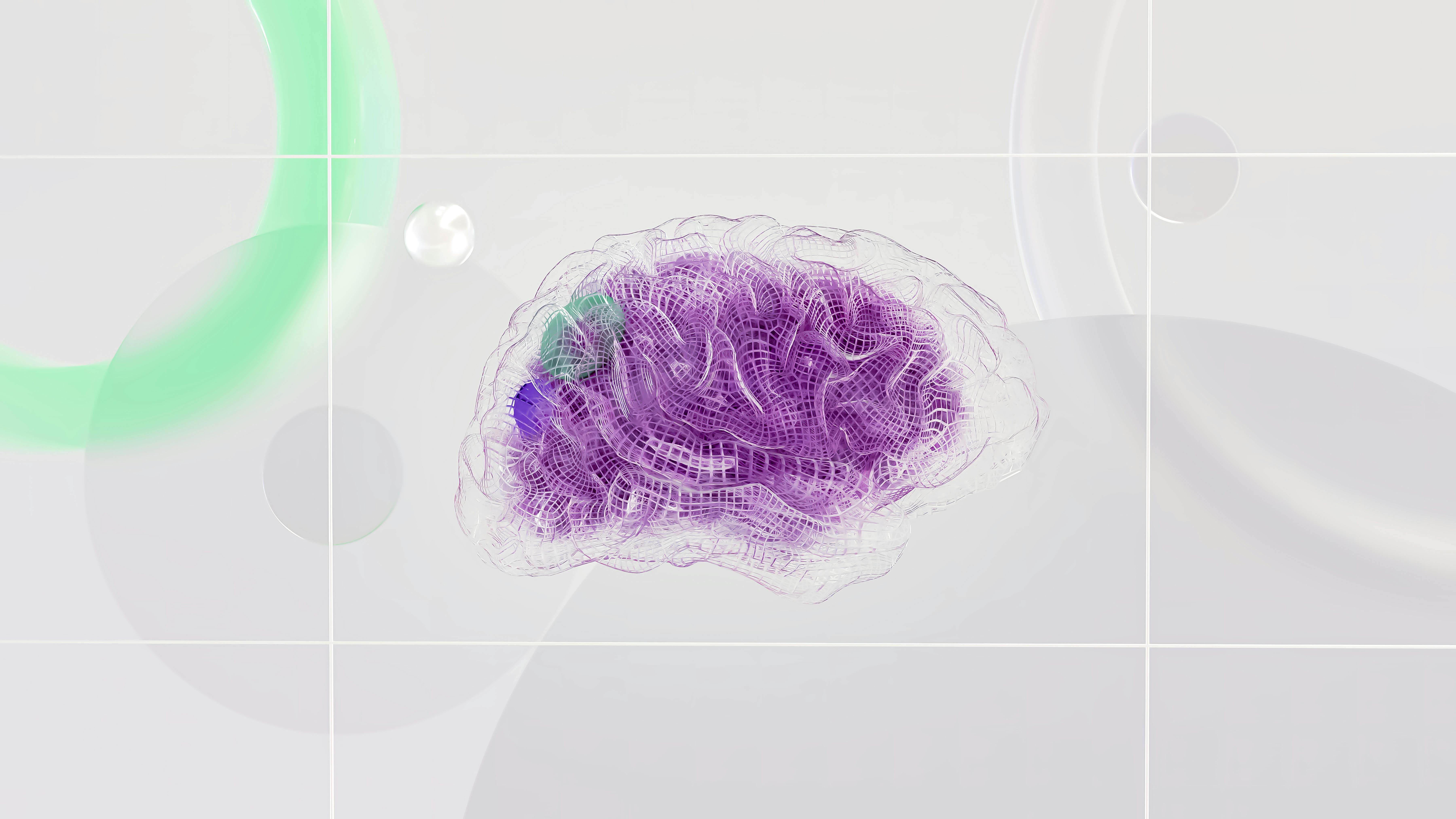
Knowledge graphs operate in a similar way.
When artificial intelligence identifies new patterns, relationships, or associations between entities, these discoveries can be incorporated into the graph as new connections. Over time, this continuously enriches the graph, enabling it to support future queries with increasingly relevant and contextualized information.
A data model is a visual representation of an organization's information assets and the relationships between them.
It provides a structured framework for organizing data, defining how different entities interact, and ensuring that information can be stored, managed, and analyzed effectively.
Knowledge graphs can be viewed as an advanced form of data model, designed to capture not only data itself but also the rich network of relationships that gives that data meaning.
Knowledge graphs represent a major advancement in the way information is organized, connected, and leveraged by artificial intelligence, machine learning, and data science technologies.
Their ability to model complex relationships between entities enables organizations to uncover valuable insights, make more informed decisions, and deliver richer, more personalized user experiences across a wide range of applications. 💡✨
As AI systems continue to evolve, knowledge graphs are expected to play an increasingly important role in helping machines understand context, connect information, and generate more accurate and meaningful results.
Want to explore the future of AI-powered search?
Check out our in-depth guides on Generative Search Optimization (GSO) and Answer Engine Optimization (AEO) to discover how search is evolving in the age of artificial intelligence and learn how to optimize your content for next-generation search experiences.
Last update: July 15, 2026