
SiteW makes website creation easy and enjoyable thanks to a solution without technical or financial constraint.
Testimonials, interviews and examples of created websites. Discover our users’ reviews and creations.
Our history, news and commitments. Beyond online service, discover SiteW.
All resources at the service of your online presence.
11 minutes
To follow or not to follow? That is the question…
No, we’re not talking about the latest trending influencers on Instagram, but rather about nofollow and dofollow links! 🔗
If you want to master SEO and build a well-ranking website, you need to clearly understand the distinction between these two concepts.
Dofollow and nofollow links are like the yin and yang of SEO. They balance each other, complement one another, and stand in opposition at the same time. ☯️
So, what’s really going on with these links? Link attributes are subtle signals quietly communicated to search engines. The real question, then, is how to use them effectively to strengthen your SEO strategy.
That’s exactly what we’re going to explore together! 🔎
A nofollow link includes a rel="nofollow" attribute in its HTML code. This attribute tells search engines not to pass link equity from the source page to the destination page.
As such, nofollow links carry very little weight from an SEO perspective.
Introduced in 2005, their primary purpose was to combat comment spam.
The key difference between dofollow and nofollow links lies in how they handle the transfer of PageRank and how search engines treat them in terms of indexing.

It is an algorithm developed by Google to rank web pages in search results. It assigns a score to each page based on the number and quality of incoming links, i.e., other pages that link to it.
The more links a page receives from authoritative pages, the higher its PageRank, which in turn improves its visibility in SERPs (Search Engine Results Pages).
Dofollow links pass on PageRank and contribute to the ranking of the linked page, encouraging Google to crawl and follow the link.
Nofollow links, on the other hand, do not pass PageRank and are generally not followed by search engine crawlers.
In other words, if you get a nofollow backlink, the linking page does not transfer its authority to your page. It will not improve your ranking on Google.

However, starting in 2019, Google began treating nofollow links as “hints” for indexing rather than strict directives, allowing its algorithms to interpret them more flexibly.
That same year, the rel="sponsored" and rel="ugc" attributes were introduced, making it possible to provide additional context about the nature of a link.
These attributes can be combined with the nofollow value to indicate that a link should not be considered an endorsement or a factor influencing on rankings:
rel=“sponsored” is used for links created as part of advertisements, sponsorships, or other partnerships (affiliate marketing, etc.).
The rel="ugc" attribute is intended for user-generated content, such as blog comments or forum posts.

<a href="https://example.com" rel="ugc">Example</a>
<a href="https://example.com" rel="ugc nofollow">Example</a>
Nofollow links are typically used when you want to reference a page without explicitly endorsing it.
For example, when you list products or services and simply want to give your readers the option to learn more, without granting those links any SEO advantage.
They are also commonly used in user-generated content, such as publicly accessible comment sections. 💬
Given the vast number of links shared in these spaces, it’s impossible to guarantee the reliability of every destination page. Using nofollow in these cases is a prudent choice, helping you avoid potential SEO penalties from search engines.
This approach also protects your site from potentially harmful external links that could negatively impact your Google rankings. 🛡️
For affiliate or sponsored content, using nofollow links is essential. This is about maintaining transparency and adhering to SEO best practices, ensuring that your website remains a credible and trustworthy source in the eyes of search engines.
To protect your site’s SEO integrity, use nofollow links for duplicate or automatically generated content.
This prevents search engines from wasting resources indexing pages that do not add real value to your site.
For example, linking to multiple variations of the same product using dofollow links could result in unnecessary crawling of these nearly identical pages.

Nofollow links signal to Google that it should not follow or index a page, but this is not an absolute guarantee. Ultimately, the search engine may still choose to do so.
For stricter control, you can use a robots.txt file or a noindex tag to block direct crawling and indexing. 🤖
In the past, nofollow links were mainly used on external links to preserve link juice (that is, the transfer of SEO authority from one page to another).
For example, back then, if you wanted internal links to carry more SEO weight, you would add the nofollow attribute to all external links.
However, this technique is now obsolete. Google has changed the way it interprets and uses nofollow links in relation to PageRank.
…So what now? 🤔
There are only a few cases where it’s recommended to avoid using nofollow links, and fortunately, they’re pretty easy to remember.
For most internal links
All internal links on your site (with the exception of duplicate pages) should generally be dofollow. This ensures smooth navigation and allows you to fully benefit from SEO value.
For relevant external websites
Avoid applying the nofollow attribute for all outbound links without careful consideration.
Dofollow links to high-quality, authoritative external sites can have a positive impact on your site’s SEO by signaling to Google that your content provides valuable and reliable resources.
Don’t forget to optimize anchor text for your dofollow outbound links to improve both relevance and user experience!
While it’s true that they don’t contribute as much as dofollow links, nofollow links still play an essential role. They operate behind the scenes, helping to maintain a natural and diverse link profile. This sends a subtle signal to search engines that you’re following best practices rather than trying to manipulate the system.
So, even though nofollow links don’t provide direct SEO value, they remain highly valuable for generating organic traffic.
Imagine earning a nofollow link from a high-traffic site: it could drive a significant influx of visitors, which could eventually lead to new leads and conversions.
And that’s when you hit the jackpot! 🏆
➡️ In short, nofollow links are the unsung heroes of a well-balanced SEO strategy, helping you avoid penalties while supporting steady, authentic growth.
And now…
Conversely, the term “dofollow” is used to describe a link that passes SEO authority from one page to another.
Unlike nofollow links, Google treats this type of link as a form of endorsement: It is taken into account in the PageRank calculation of the linked page, directly influencing its SEO performance.
What do you notice about this link? 🕵️
There are no attributes! It’s important to remember that there is no actual “dofollow” attribute—by default, all links are considered dofollow unless specified otherwise.

So when is the right time to reward a site with a dofollow link?
Ideally, you should use dofollow links when you want to vouch for the credibility and value of the page you’re linking to.
When you point to a reliable, high-quality source, you signal to your audience and search engines that you trust the content and that it meaningfully complements or enhances your own.
For example, if you’re writing an article on digital marketing trends and want to reference a reputable study or a well-established source, using a dofollow link is the best approach.
The objective is to foster a network built on trust and shared knowledge, where link equity can flow naturally between high-quality pages. This creates an ecosystem of mutual growth grounded in authenticity.
The main difference between nofollow and dofollow links lies in how they influence search engine rankings.
Dofollow links can improve the Google ranking of the page they point to. Nofollow links, on the other hand, cannot.
Does this mean that nofollow links are completely useless? Well, no. 🤷
You might assume that nofollow links serve little purpose because of their limited SEO impact, but that’s only if you’re looking at them from a purely ranking-focused perspective.
In reality, there are many ways to benefit from nofollow links…
Let’s take a closer look together.
As mentioned earlier: although nofollow links do not influence PageRank, they are highly effective for driving traffic and increasing your brand’s overall visibility in search.
As noted above, Google views a balanced mix of dofollow and nofollow links as a sign of a natural and authentic SEO strategy—unlike the aggressive or manipulative practices often associated with so-called “black hat” SEO.
SEO techniques are generally divided into 3 categories:
White hat techniques are fully legitimate and comply with Google’s guidelines
Black hat techniques involve deceptive practices aimed at manipulating the system and bypassing those guidelines.
And gray hat techniques fall somewhere in between... 🎩
When creating links to external sites, it’s not advisable to use dofollow links indiscriminately, especially if the site’s content is purely illustrative or if its credibility is uncertain (for instance, if it could be considered spam).
Using nofollow attributes allows you to link to such pages without endorsing them or passing on ranking authority, thereby preserving the integrity of your site’s link profile.
By applying nofollow links to certain internal content, you can guide search engines toward the most valuable sections of your site.
This approach helps prevent less important pages—such as those containing duplicate content—from attracting unnecessary attention, allowing search engines to focus their crawling and indexing efforts on the pages that truly matter.
Wondering how to tell the difference between dofollow and nofollow links? Here’s a simple method:
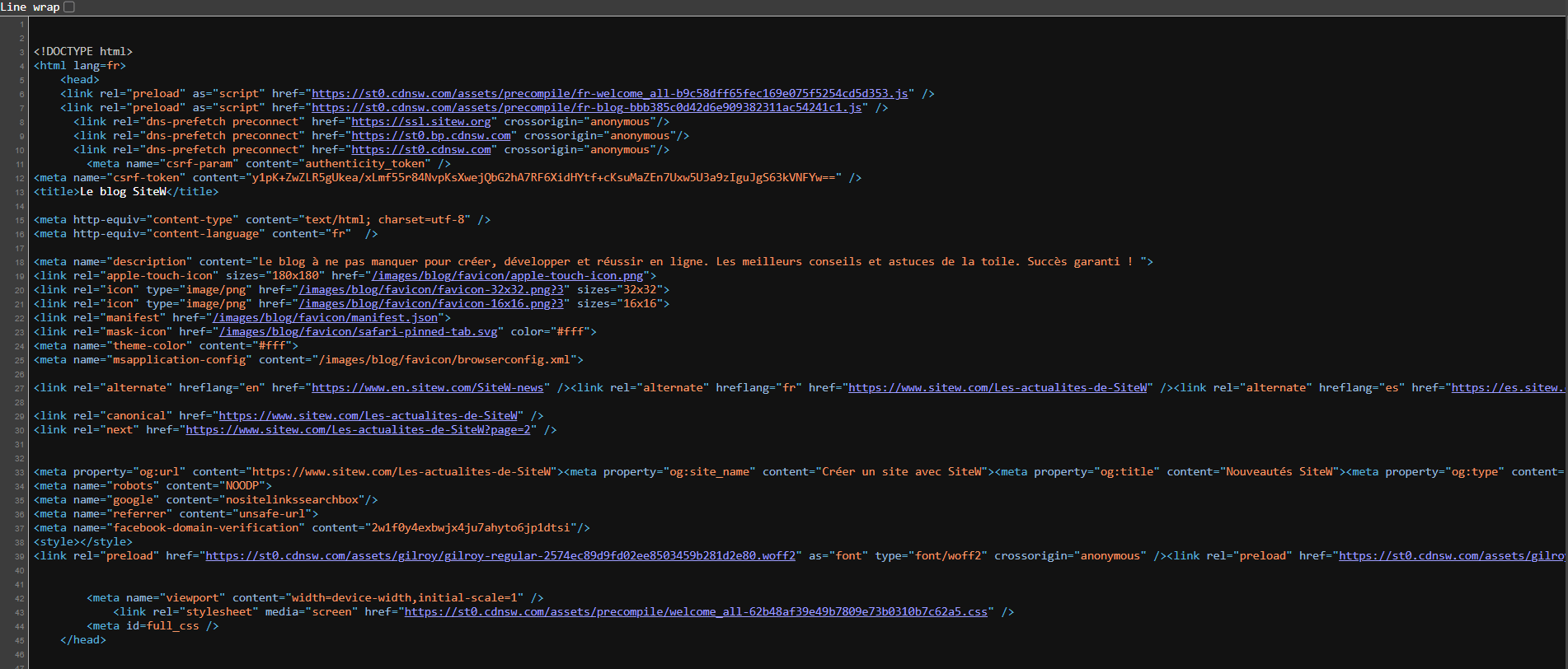
Start with the basics: right-click on the link you want to examine and select “Inspect.”
This will open your browser’s developer tools and take you to the element panel. If you see the rel="nofollow" attribute, then it’s a nofollow link.
If that attribute is not present, congratulations—you’re looking at a dofollow link. 🙌
Balancing dofollow and nofollow links is essential for building a strong SEO strategy that aligns with Google’s algorithms.
Here’s how you can strategically leverage both types of links to enhance your SEO performance:
Understand their roles: Dofollow links form the backbone of your online presence, passing link equity and strengthening your site’s authority. Nofollow links, however, are just as important, as they add diversity to your link profile and help protect you from potential penalties.
Integrate them into your content marketing: Incorporate both dofollow and nofollow links into high-quality, relevant content. ✍️
Leverage traffic potential: Nofollow links, especially those from reputable high-traffic websites, can act as powerful traffic drivers.
👉 Ultimately, it’s not about choosing one over the other, but about understanding how to use dofollow and nofollow links together to support your SEO goals.
We’ve explored the world of dofollow and nofollow links, uncovering the unique roles each plays in shaping your SEO strategy.
Some help you build authority and climb the rankings in search engine results pages, while others serve as valuable allies in maintaining a clean and ethical backlink profile.
It’s not about taking sides, but rather about combining these complementary forces to build a robust and sustainable SEO strategy. 💪
Last update: May 01, 2026