
SiteW makes website creation easy and enjoyable thanks to a solution without technical or financial constraint.
Testimonials, interviews and examples of created websites. Discover our users’ reviews and creations.
Our history, news and commitments. Beyond online service, discover SiteW.
All resources at the service of your online presence.
12 minutes
Compelling dialogue, stunning animations, and a gripping storyline... these are the elements that define a great video game... and artificial intelligence can take each of them to the next level.
By automating time-consuming tasks, AI frees up developers to focus on creativity, refine gameplay mechanics, and come up with new ideas.
So, can AI really help create a video game? And how is artificial intelligence reshaping the gaming industry?
Here is our curated list of the best AI tools for video game development... 🎮🤖
In the ever-changing landscape of video games, artificial intelligence has become a true game changer.
Generative AI is transforming the way games are built, making development more efficient, creative, and far more dynamic. 🚀
Game engines are software frameworks that developers rely on to design and build video games.
With the help of AI, developers can create more immersive and dynamic environments. AI-powered engines can automatically generate a wide range of components, saving time and resources while producing more realistic and complex worlds.
AI plays a key role in video game development by enabling personalized player experiences.
Maps, levels, objects... Using advanced algorithms, AI can generate an endless amount of new content.
Procedural generation powered by artificial intelligence can also take into account player preferences and behavior, adapting the content in real time to deliver a truly unique gameplay experience.
AI is a powerful asset in character development, allowing in-game characters to display more nuanced behaviors and react dynamically to the player actions.
This results in deeper immersion and strengthens the emotional connection between players and characters.
AI can generate a wide variety of gaming environments, including landscapes, terrain, architecture, and entire worlds.
By leveraging deep learning models trained on massive datasets of real-world imagery, developers can create environments that are highly realistic, visually diverse, and richly detailed.
AI plays a growing role in narrative design by generating story elements or enhancing the overall storytelling experience.
Using natural language processing (NLP), AI can analyze player choices and reactions, then adapt the narrative accordingly, creating new dialogue options, evolving character arcs, or even entirely new storylines.
Finally, AI significantly improves game testing.
Traditionally, testing relies on human testers or scripted bots, and both of which have limitations.
AI-powered testing can automate large portions of the process, accelerating development cycles and improving overall game quality.
After securing $6 million in seed funding in January 2023, Scenario has continued to grow rapidly. The platform was designed to help game developers create high-quality, style-consistent visuals that match their style and artistic direction.
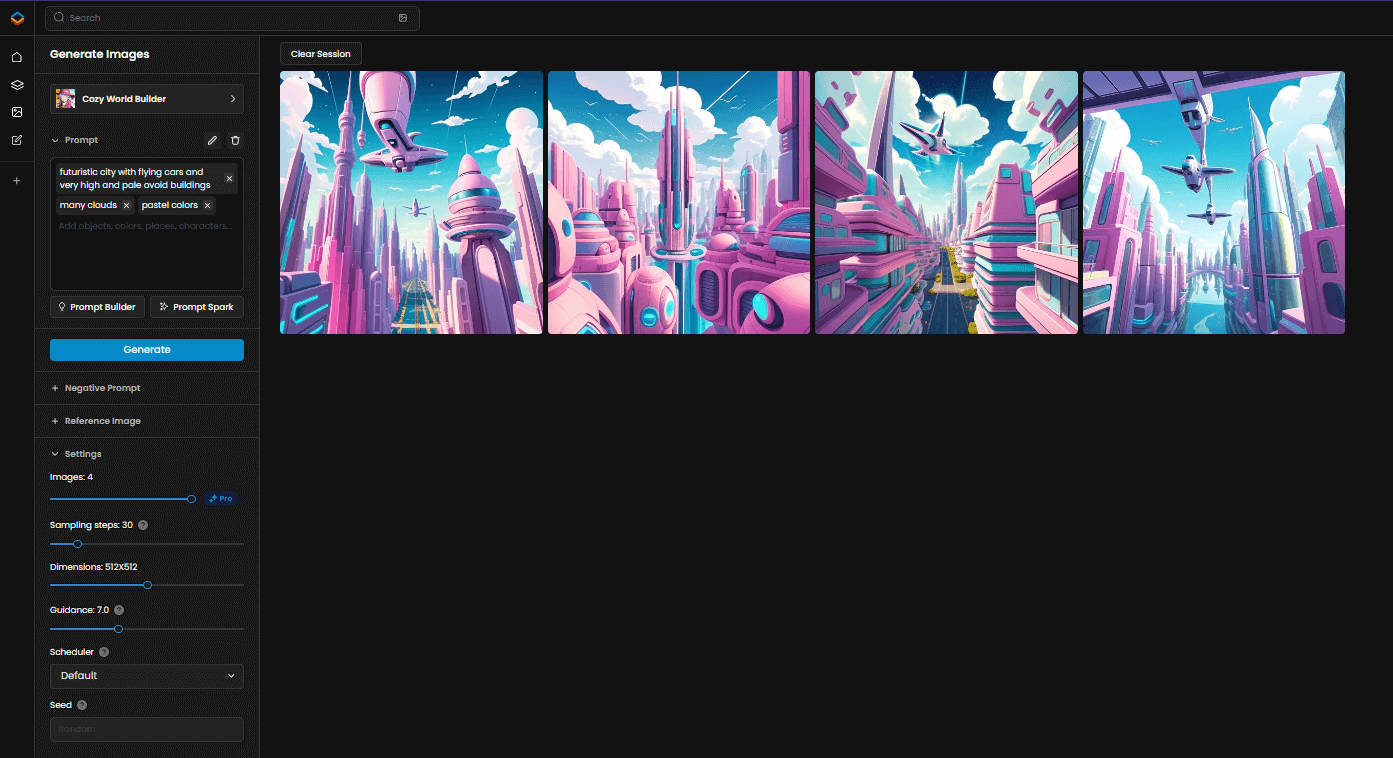
One of Scenario’s standout features is its fine-tuning capability. This feature allows you to train AI models based on your own creative preferences.
Simply upload your training data and the AI learns visual patterns: shapes, colors and artistic style.
Once training is complete, the system can generate images that match your aesthetic. From there, you can then bring new assets to life by simply describing the elements you want to add.
With Scenario, even game creators with little or no technical background can train their own AI to produce unique, custom game assets. One major advantage is style consistency: all the elements produced remain visually cohesive, which is not the case with many other generators.
Thanks to advanced settings, you can generate up to 16 images at once. You can then refine, favorite, delete, or export them with a single click.
This solution is ideal for solo game developers and small creative teams, as it reduces production time and costs while encouraging experimentation and creative freedom.
Promethean AI harnesses the power of AI to automate the creation of 3D environments, enabling game developers to easily build rich and detailed worlds.
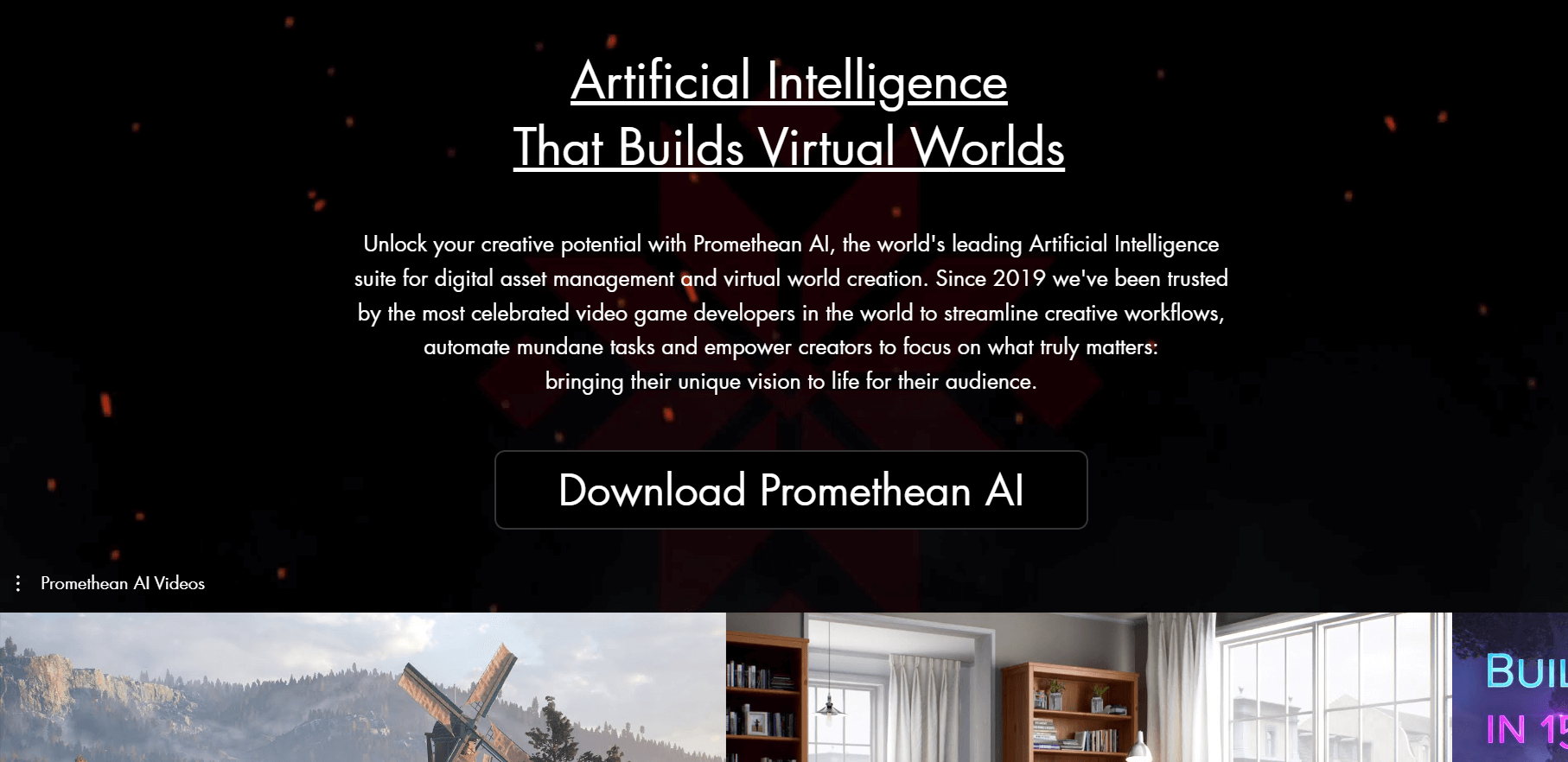
Its core strength lies in its ability to generate many styles of scenery from simple text descriptions, dramatically accelerating world-building workflows.
Ludo.ai is an ideation platform designed specifically for video game designers and developers.
It analyzes market trends and top-performing games to help you identify promising themes, mechanics, and concepts for your next hit title.
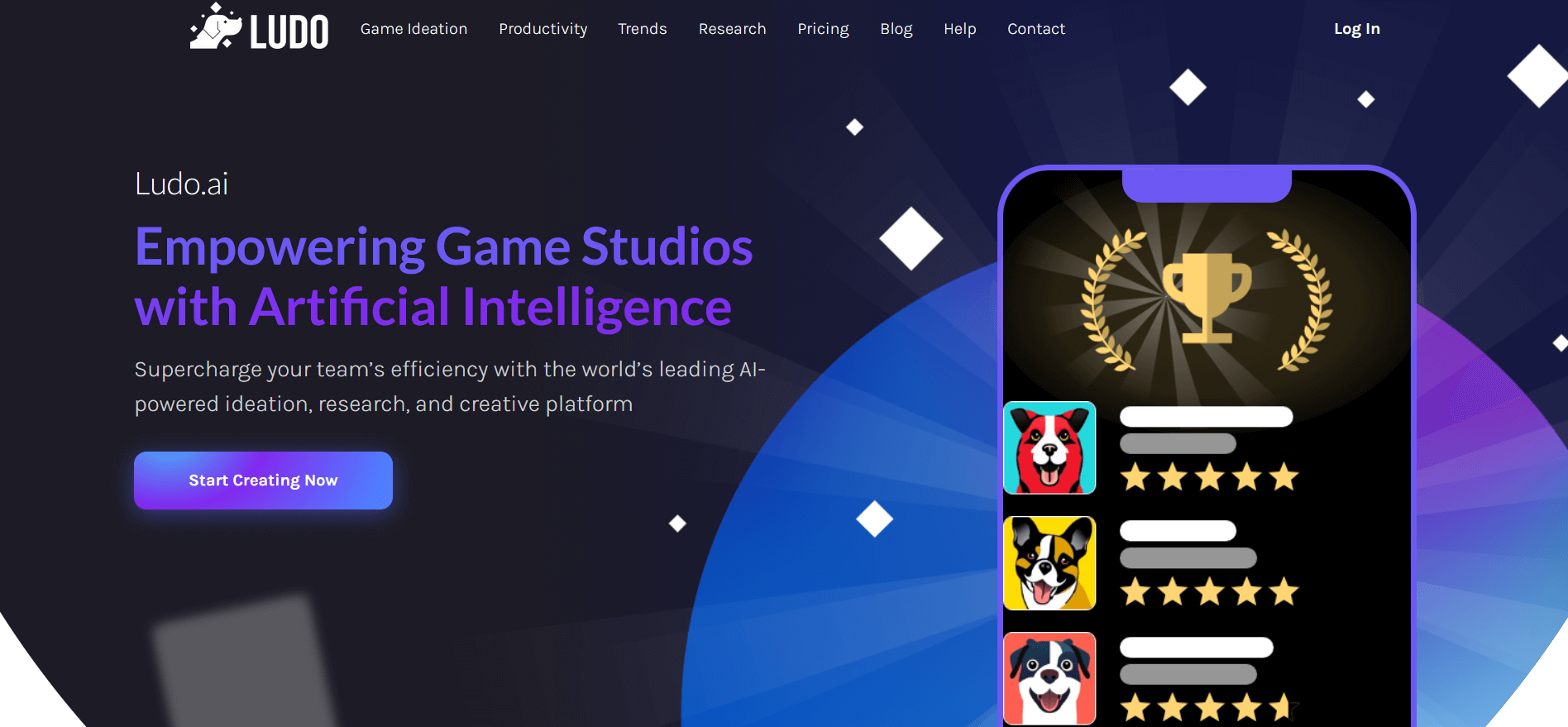
You can search through thousands of examples from top charts, view their performance metrics and examine promotional visuals.
The platform helps you generate new game ideas, along with gameplay mechanics, icons, screenshots, and store descriptions..
The user interface is intuitive. You can get fresh ideas in seconds, which you can save for later refinement.
Ludo.ai also includes a “dice roll” feature, which produces randomized ideas based on statistical data (perfect for sparking unexpected inspiration).
But the software also uses AI to analyze player behavior and adapt the game elements accordingly, delivering a more personalized and engaging player experience.
Rosebud.ai is an all-in-one platform that makes video game creation more accessible for developers.
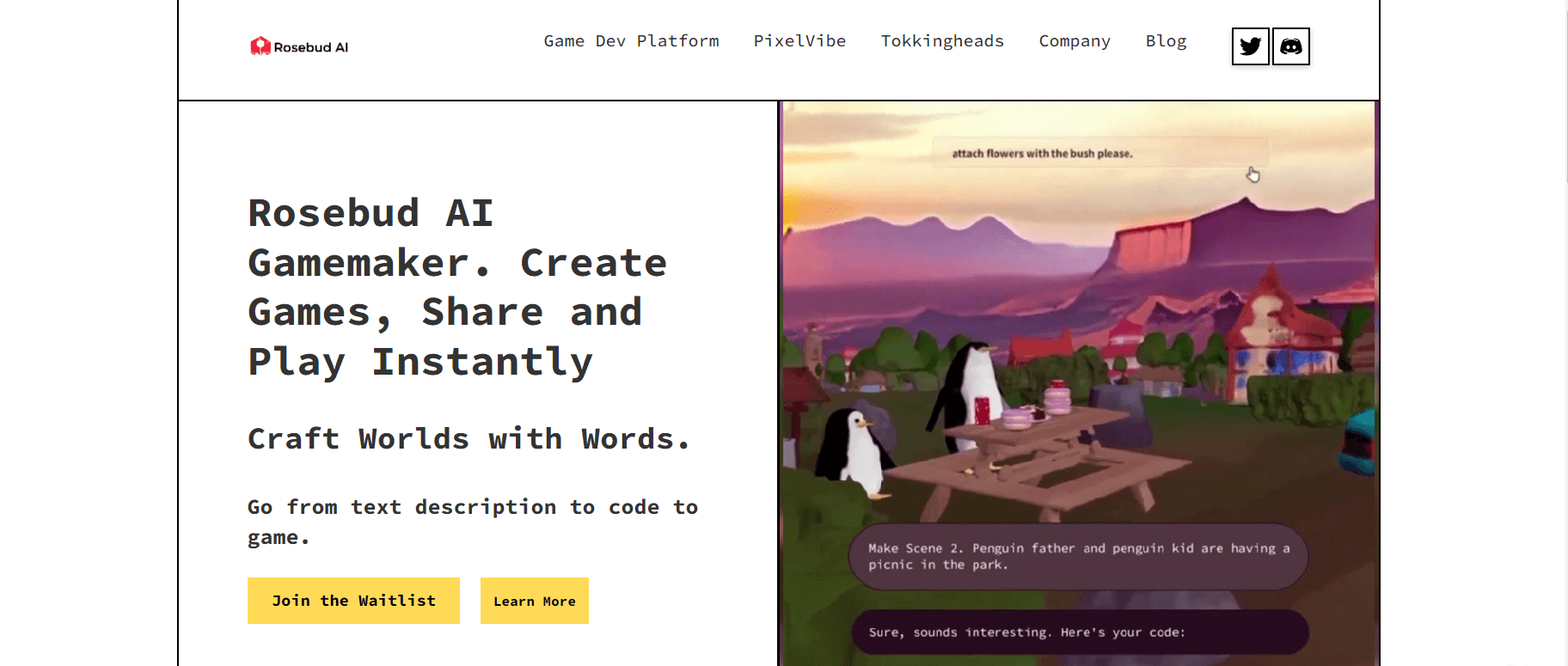
With this software, users write simple instructions, and the AI-driven system turns those ideas into working code, functional assets, and even complete games.
It’s a powerful solution for rapidly prototyping concepts and accelerating the overall game development process.
Layer.ai is designed to help game developers easily create rich and detailed environments.
The platform allows you to generate a variety of 3D layers, terrain, or vegetation, based on your specifications. It is a versatile solution that supports many aspects of game development, from environment design to resource optimization for better performance.
Once logged in, you can choose from several options: character design, environment design, object creation, or user interface (UI) design. Simply provide your instructions and let the AI handle the rest.
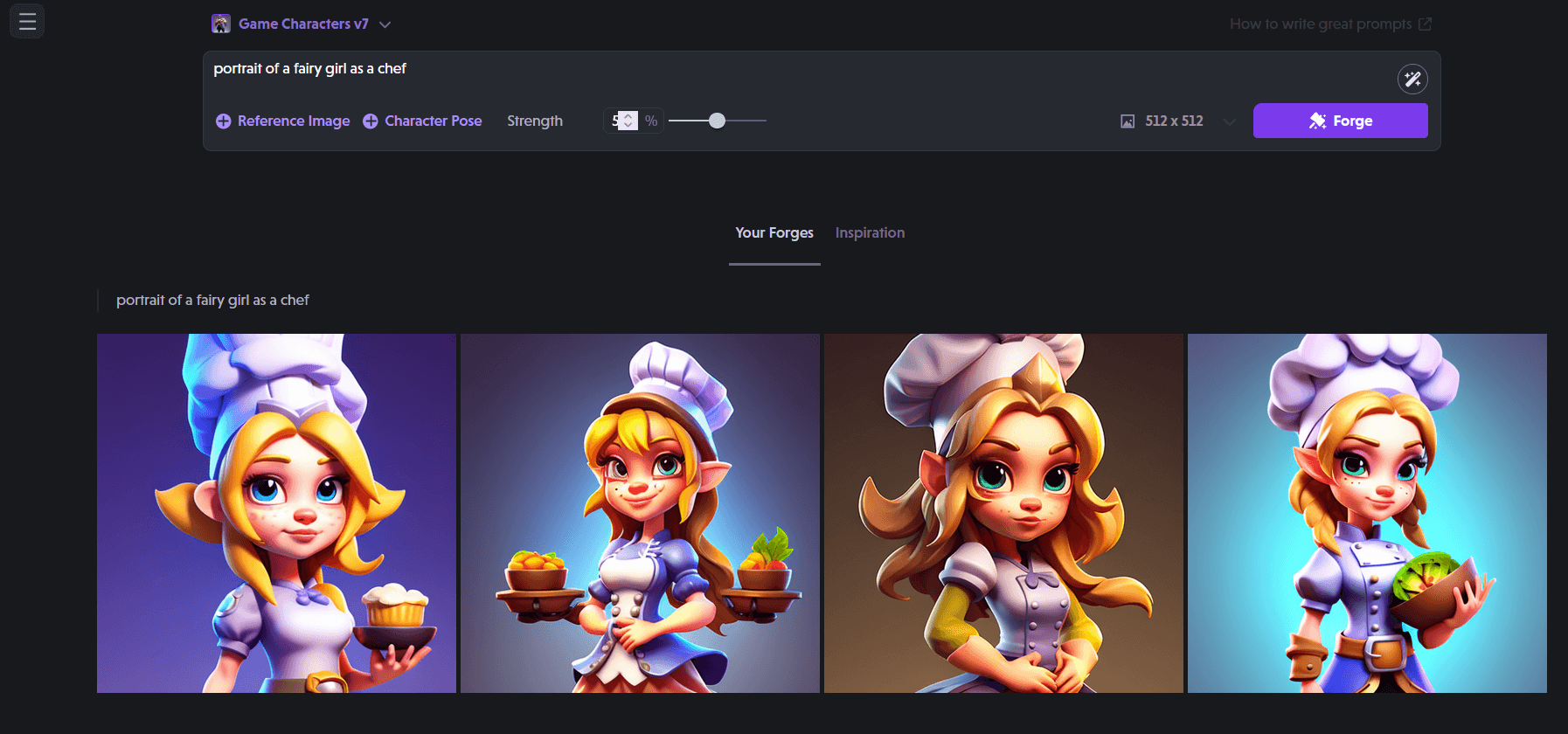
But that’s just the beginning. By uploading reference images, sketches, asset collections, backgrounds, or maps, Layer.ai takes your inputs into account, builds a style guide, and generates an unlimited number of visual variations that remain stylistically consistent.
Hotpot.ai is a versatile, multi-purpose platform offering a wide range of AI-powered design tools.
While it’s particularly useful for game developers, it’s also a valuable resource for marketers and graphic designers.
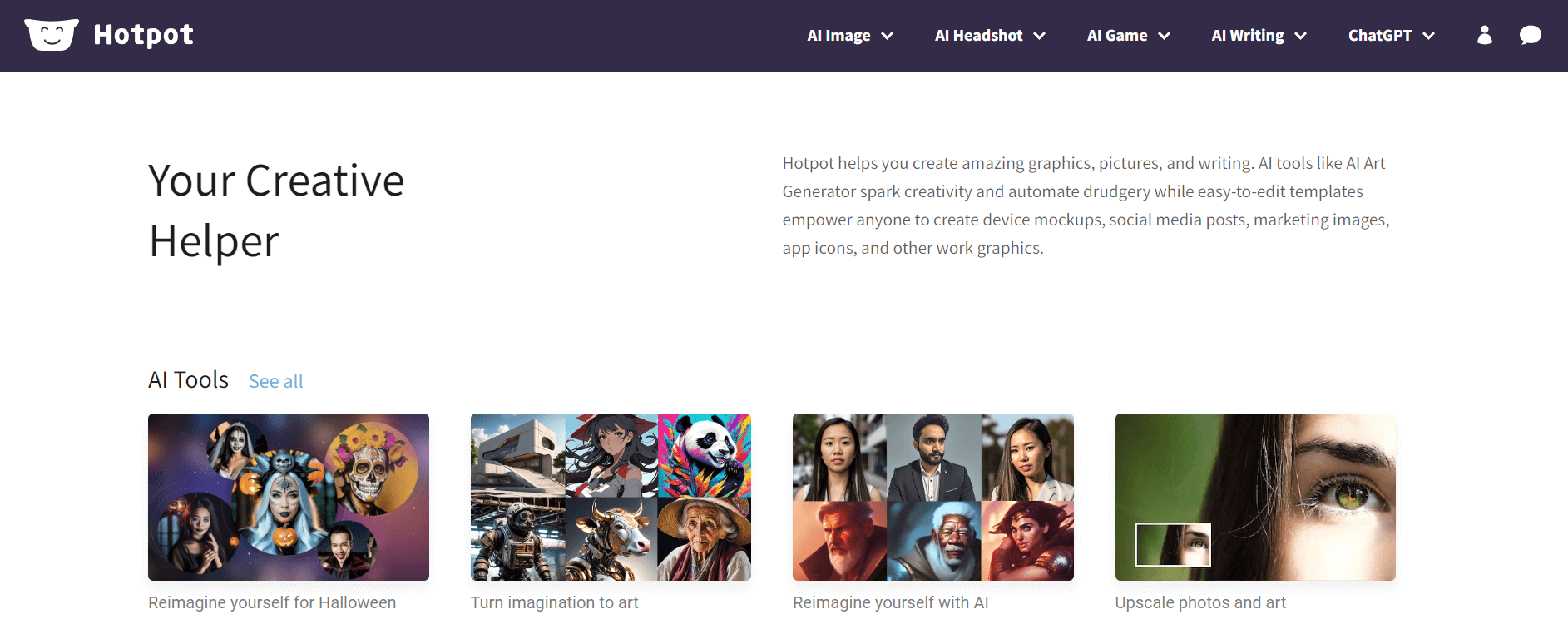
In addition to game-related visuals, Hotpot.ai includes tools such as an AI photo generator, text creation tools, and image enhancement features.
Hotpot.ai can also be used to develop device mockups, social media visuals, icons, and more.
It will therefore be useful for AI-assisted marketing and AI-based copywriting, and even for computer-assisted website creation!
Leonardo AI excels at generating a wide variety of game assets, from characters and creatures to entire environments, based entirely on your prompts.
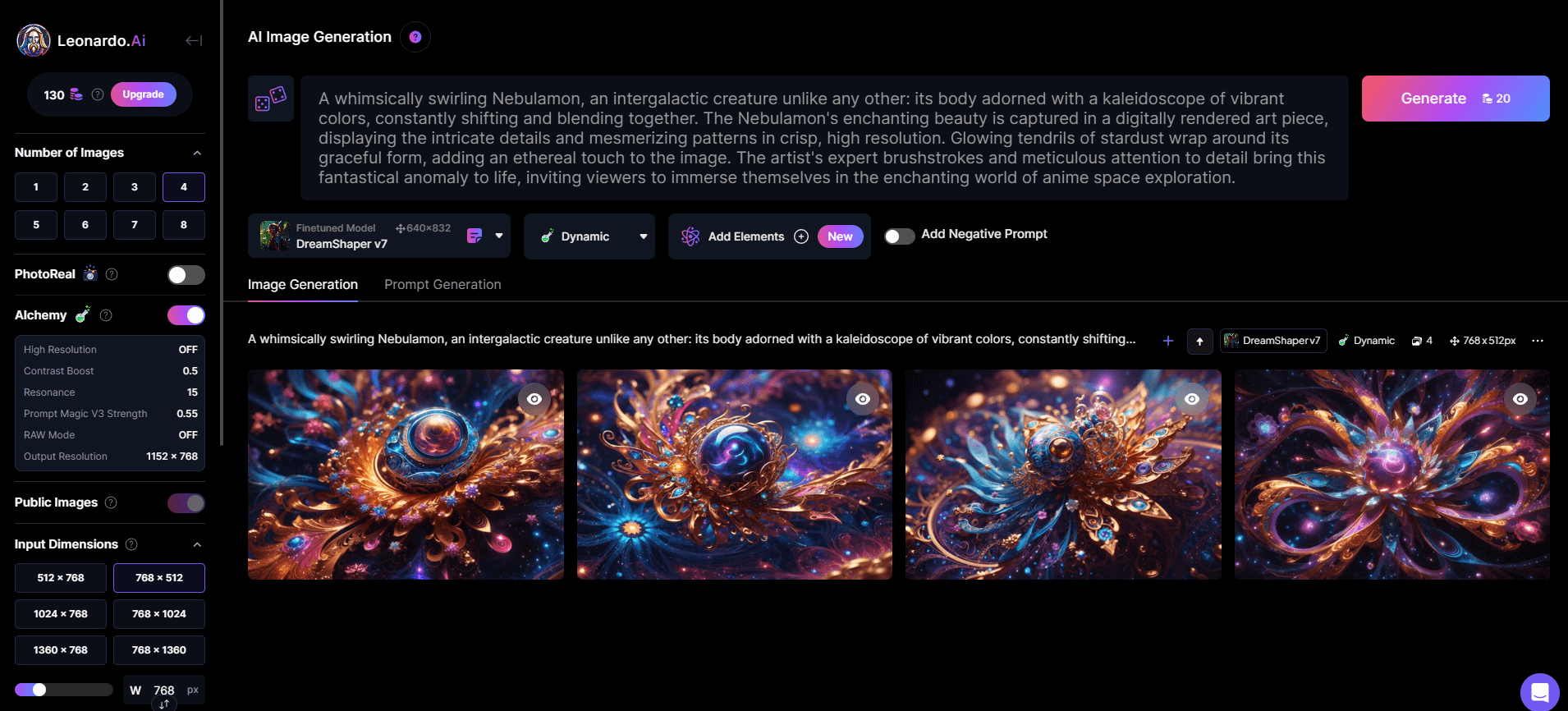
Beyond asset creation, the AI also helps optimize performance, ensuring your game runs smoothly across different devices and platforms.
InWorld is an AI-driven platform designed to help developers generate highly realistic characters, lifelike characters tailored to their creative vision.
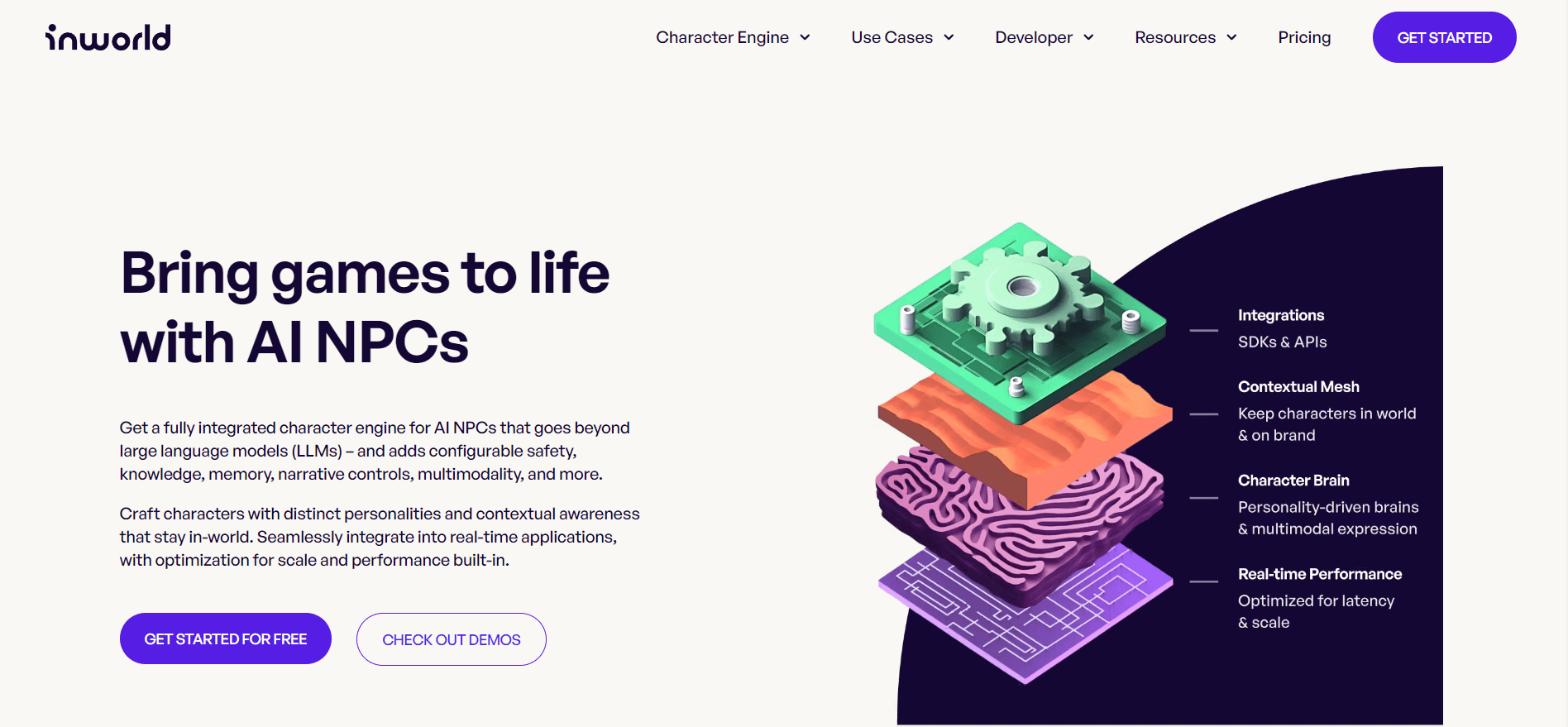
The software lets you fully customize a character’s appearance, from facial features to clothing, giving you complete control over character design and identity.
Charisma uses AI to generate dynamic scenarios, characters, and dialogues, adding a new level of depth and interactivity to games.
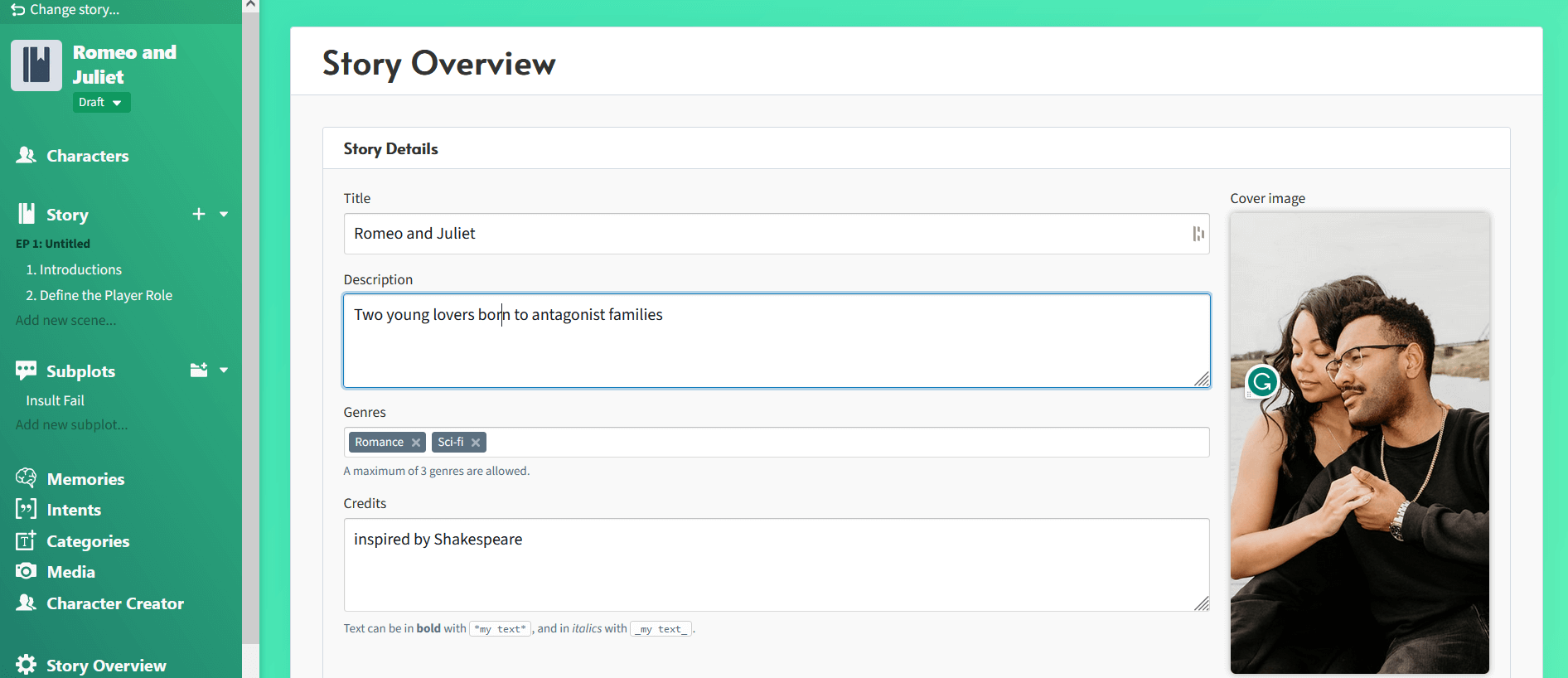
Charisma allows developers to build complex, branching stories that adapt to player choices, ensuring that each playthrough feels unique. Its ability to craft natural, believable dialogues brings characters to life and enhances narrative immersion.
Meshy is an AI-powered game design tool built to manage, analyze, and optimize 3D environments.
The software's algorithms can analyze your models and provide detailed insights, helping you optimize resources for better performance.
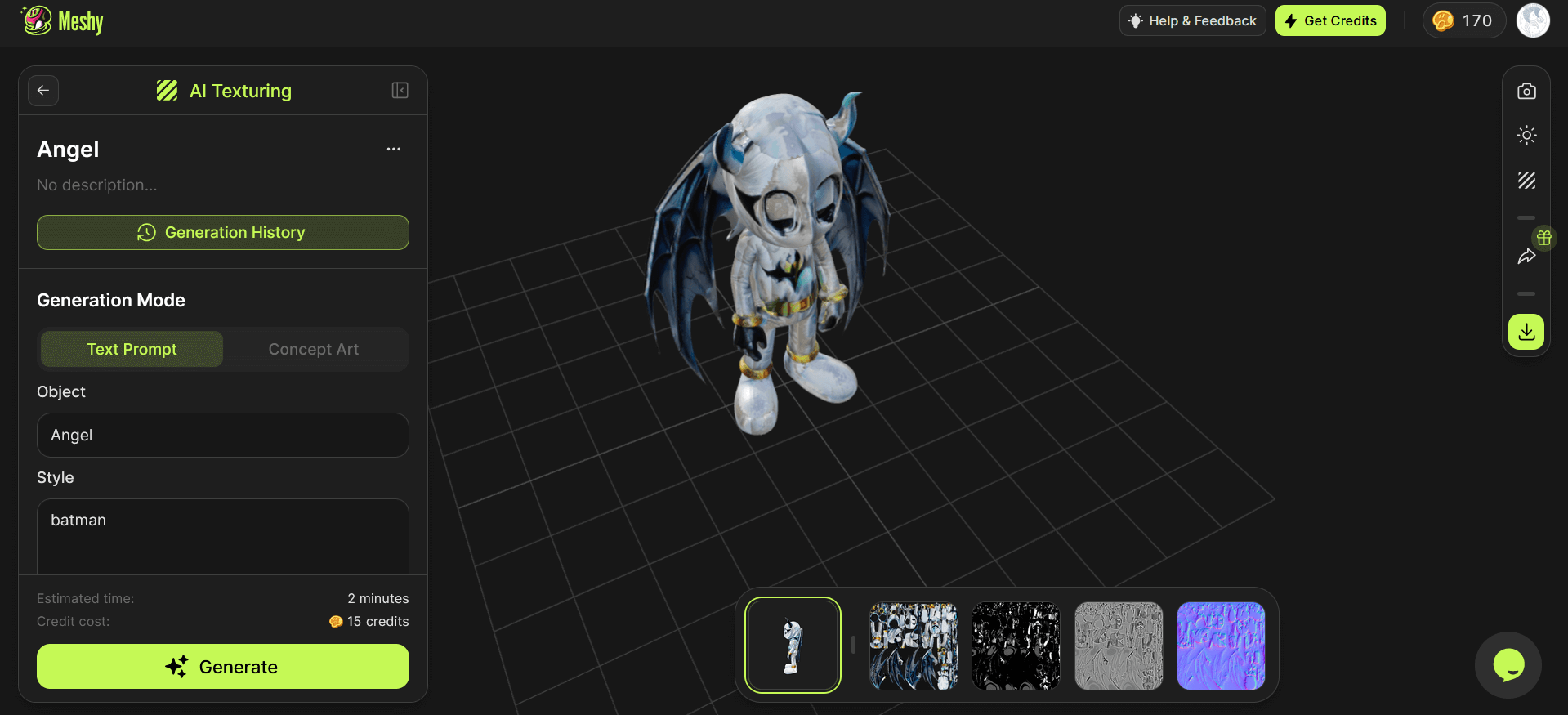
Meshy also automates technical processes such as retopology and UV mapping, saving developers time and effort during production.
GANimator is an innovative solution that uses neural motion sequencing to animate game characters with remarkable realism. It harnesses the power of generative adversarial networks (GANs) based on your data to generate animations.
Powered by generative adversarial networks (GANs) trained on your data, the tool can generate everything from simple movements to complex animation sequences, with a high level of control and precision.
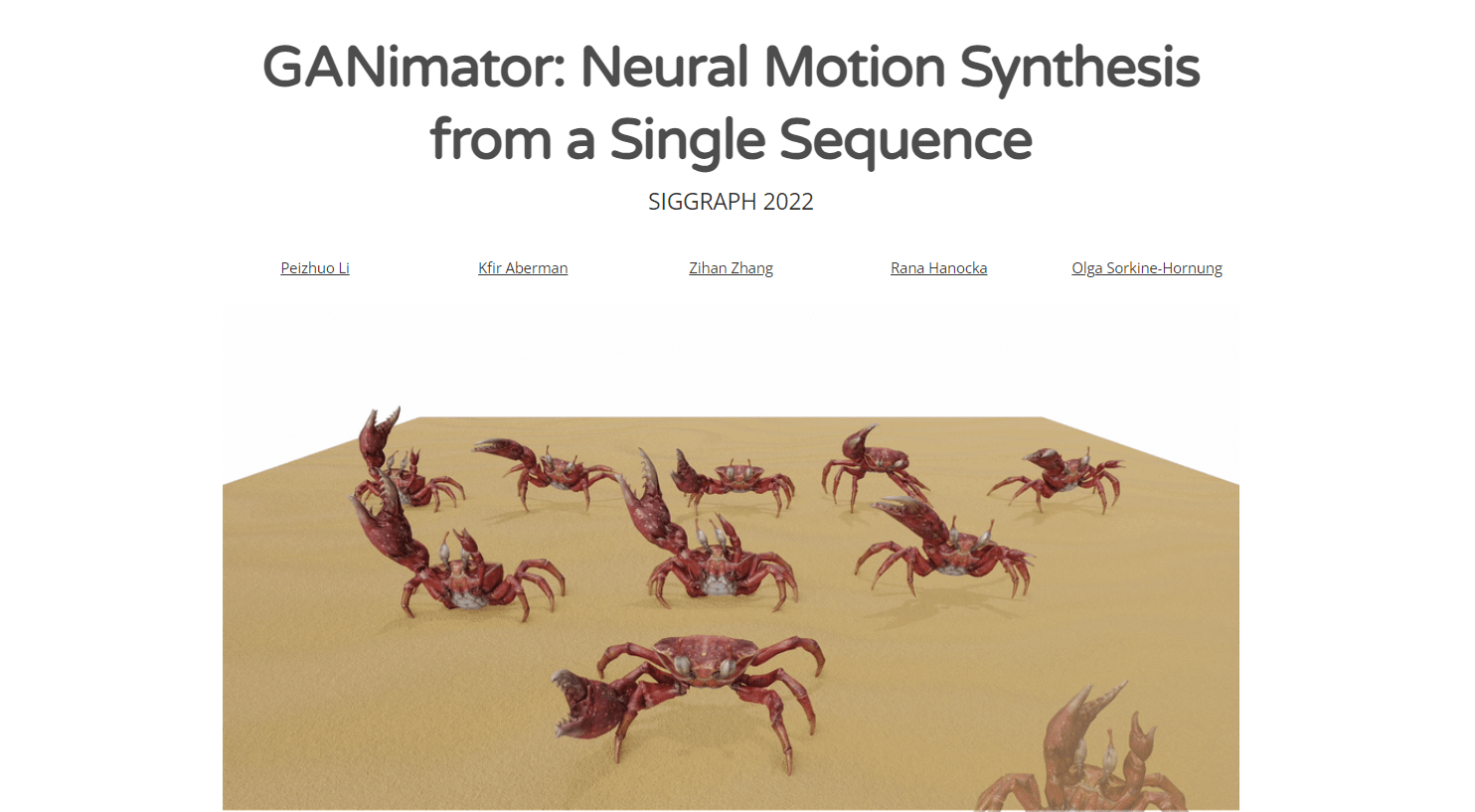
Beyond character animation, GANimator’s technology supports crowd simulation, image editing, style transfer, and interactive control across a wide range of skeletal structures (bipeds, quadrupeds, hexapeds, etc.), all derived from a single input sequence.
With its intuitive interface and numerous adjustment sliders, Dream Studio makes image generation both accessible and highly customizable.
There are a number of presets to choose from, such as photographic, anime, fantasy, or neon punk styles.
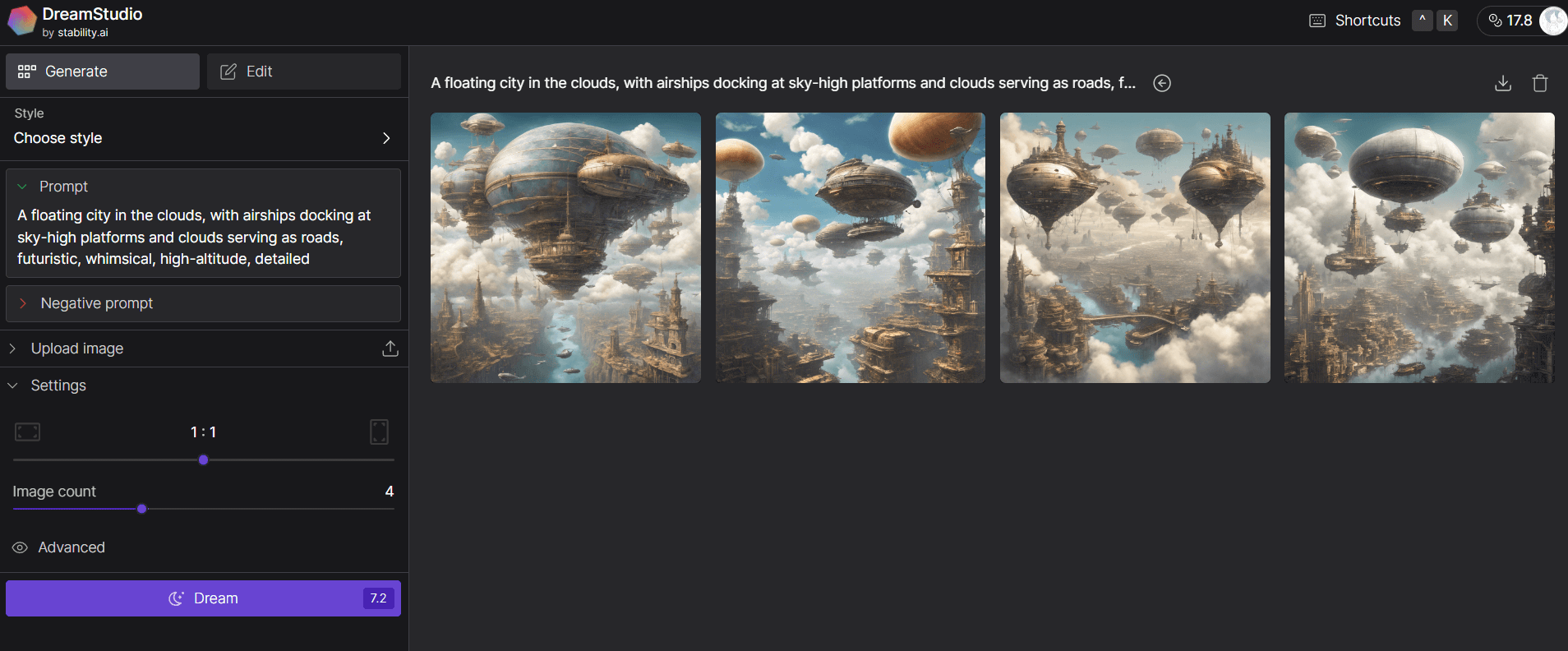
Simply enter a prompt and click the “Dream” button to generate an image.
A pre-filled prompt is available by default to help you get started, and a dice icon lets you randomize prompts for creative inspiration. 🎲
You can also upload a reference image and control how closely the result should match it.
Once your data has been processed, usually within about a minute, depending on the number of variations selected (up to 10 per generation), you’ll receive images that you can further refine to match your vision.
RunwayML offers a user-friendly interface and a variety of features for training models and integrating them into various applications.
With so many options, it can feel a bit overwhelming at first, but to say the least, the platform is incredibly comprehensive. Offering over 30 AI tools, there’s no shortage of possibilities.
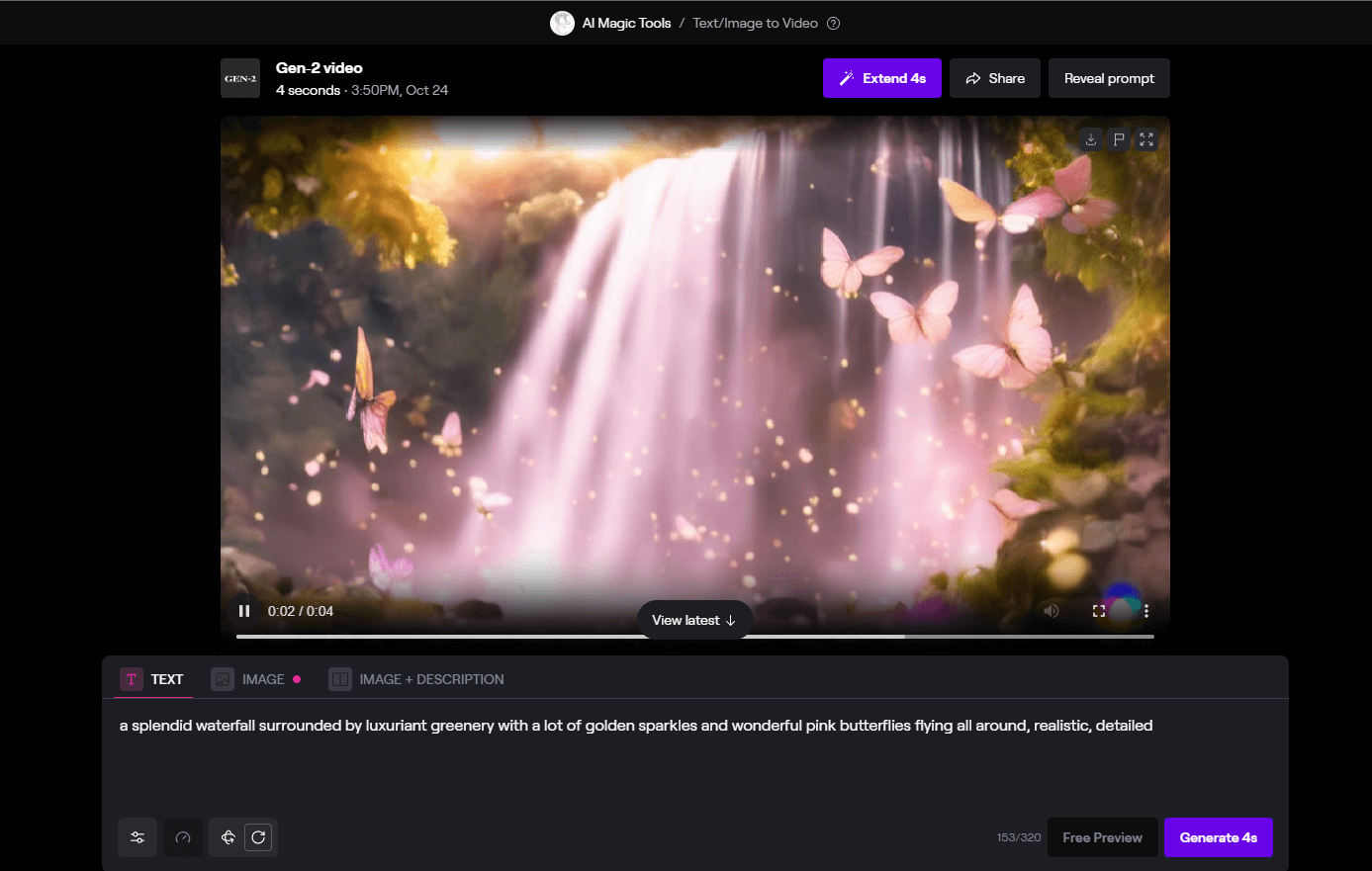
Everything runs directly in your browser, so there's no need to download anything.
With RunwayML, users can also access pre-trained models, develop custom models using their own data, and share them with others.
Plus, it integrates with popular tools like GitHub and Slack, and also offers cloud-based deployment options.
Hidden Door’s mission is to transform any piece of fiction into an immersive, collaborative role-playing experience.
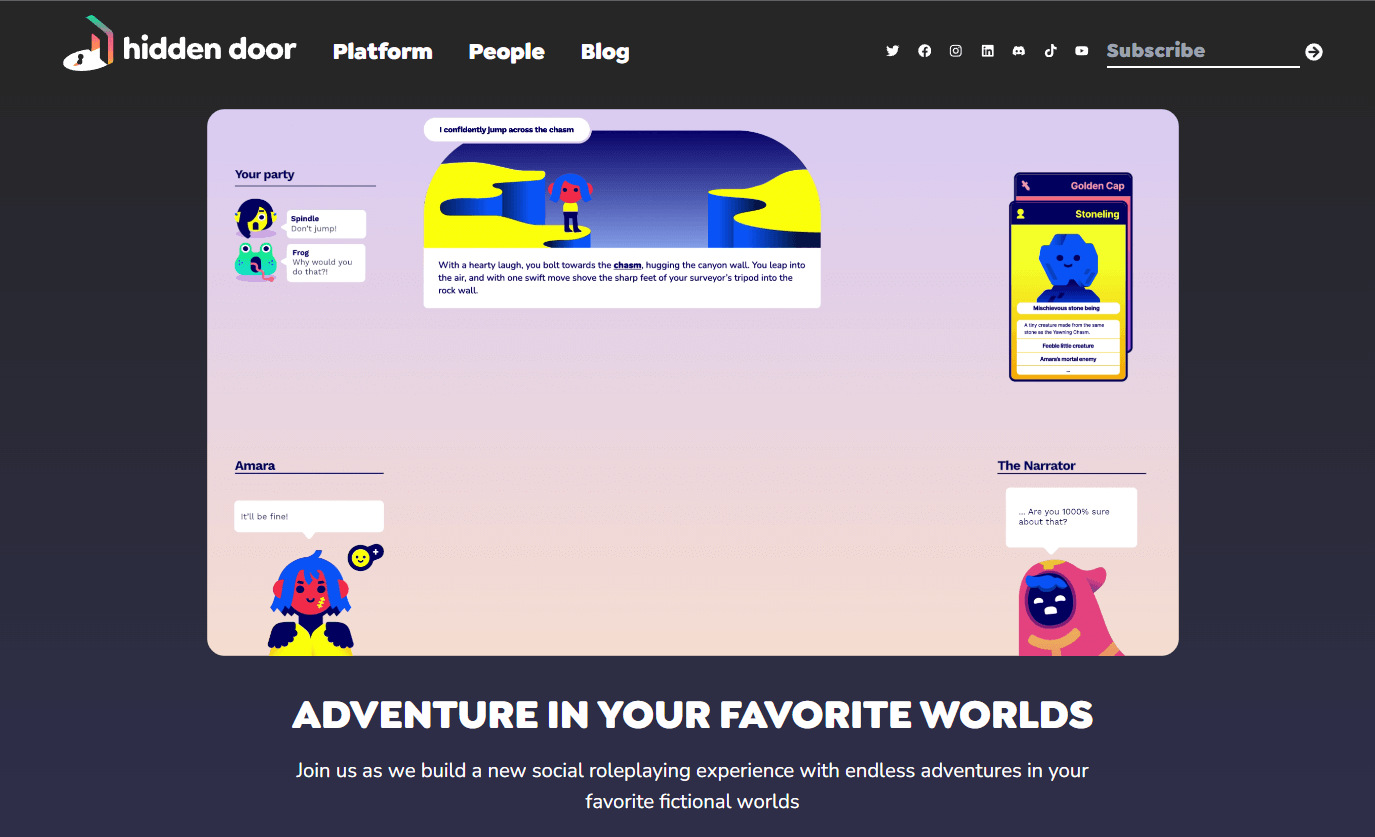
The platform uses generative AI to create an experience similar to Dungeons & Dragons. Players can dive into their favorite worlds, which are reshaped into dynamic graphic novels, with text and images generated based on their choices.

A key feature of the platform is its emphasis on content moderation, ensuring a safe environment for players, especially younger ones, while they enjoy these role-playing adventures.
Latitude.io, the company behind the adventure game AIDungeon, is now exploring generative AI with their new platform, Voyage.

It’s a dynamic tool designed for game design, enabling the creation of immersive worlds with endless possibilities.
The goal is to let users play the same game multiple times, each time experiencing a completely new adventure.
Among its many AI-powered features is the AI Art Studio, which generates images from text prompts, similar to DALL-E, Midjourney, FF2, Grok 2, and Ideogram.
Niji-Journey is a platform focused on anime and game design illustrations, using AI and deep learning to help with sketching, coloring, and artistic creation.
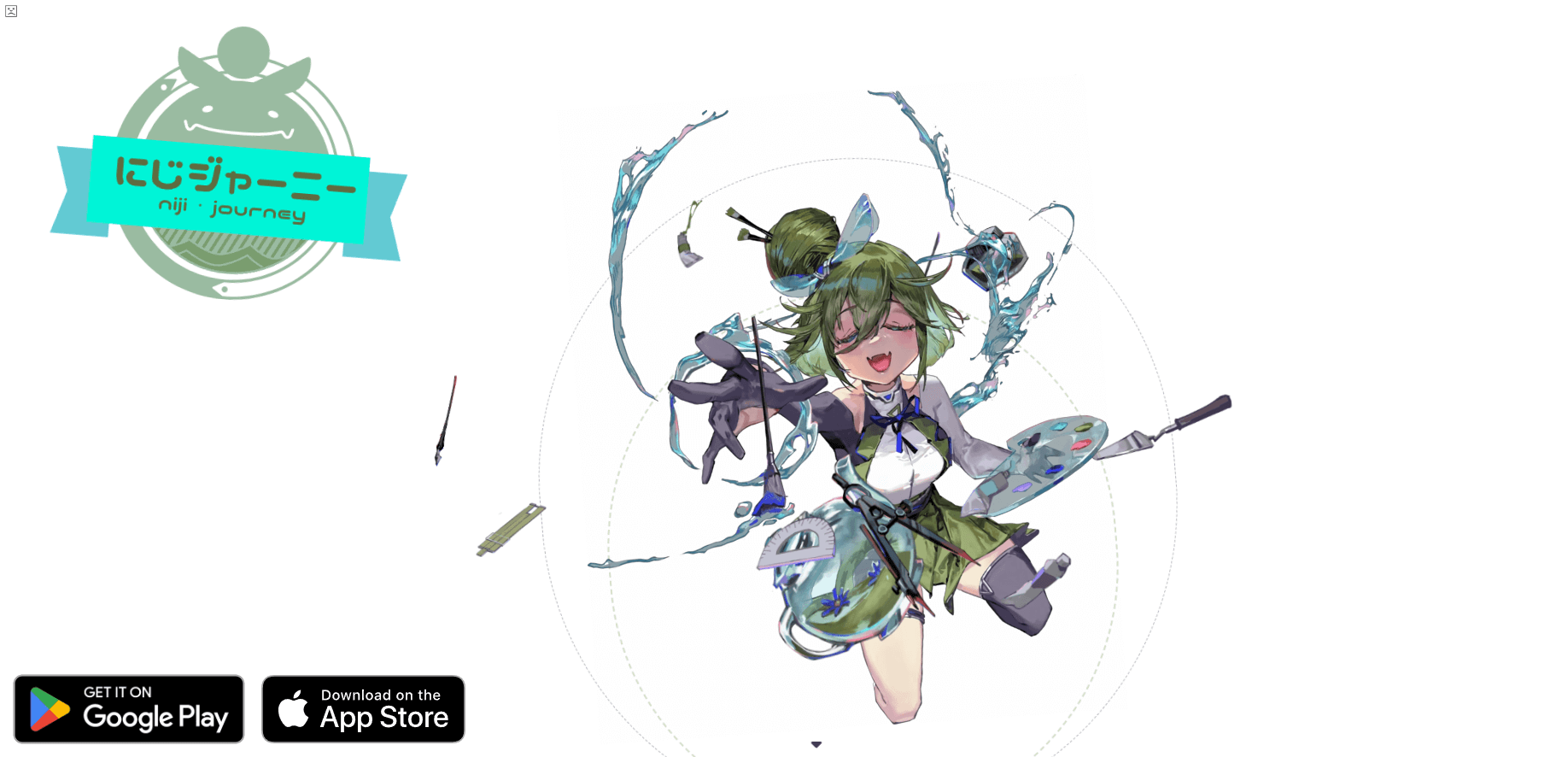
With AI’s assistance, illustrators can complete their artwork up to 10 times faster, automating much of the manual work traditionally involved.
PicFinder makes generating visuals as easy as searching for images online.
Supporting multiple generation models, it allows you to create images in a wide variety of styles with just one click.

...Just when you think you’ve seen it all, there’s always more!
Here’s a roundup of additional AI tools that are set to revolutionize the way you develop games:
Resemble.ai - AI voice generator.
ChatGPT - From text to code, and much more.
TextureLab.xyz - Create textures for your game.
Ideogram - Create realistic images from text.
Pixelicious - Turn your images into pixel art.
in3D.io - Realistic, personalized avatars.
Cascadeur.com - Character posing.
Elai.io - AI-generated video from text.
Skybox.ai - Virtual world creator.
Machinations - Build game systems.
Fotor - AI game element generator.
There's no doubt that these AI tools designed specifically for video game development offer many advantages.
But as always with artificial intelligence, the quality of your results depends largely on the quality of your prompts.
Investing time in crafting detailed, precise queries will help you get the best results. For a solid start, check out our prompt optimization method, Prompter/Optima
From designing objects and environments to generating stories and characters, AI makes the game development process faster and more efficient.
It allows creators to build immersive, interactive, and personalized experiences for players.
And, of course, once your game is ready, don’t forget to build your gaming website to showcase it!
Ready to boost your online presence with SiteW and AI?
Get started today!
Last update: February 10, 2026